Tiziano, Tintoretto, El Greco
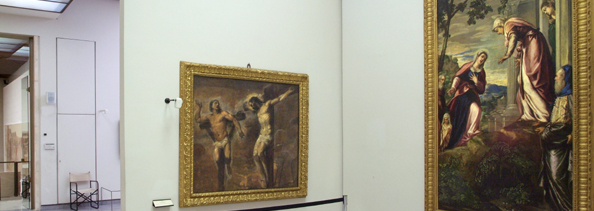
The room that concludes the Renaissance section is dedicated to
the late 16th century Veneto area, and specifically to an extraordinary
triad of artists, the Venetian Titian and Tintoretto and El Greco from
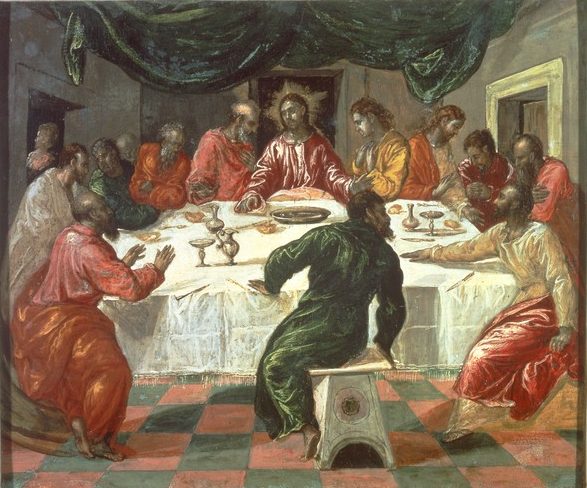
Crete. El Greco is represented by a small panel depicting the Last Supper
[20.2], painted in the early years of his stay in Venice, as revealed by his
relationship with Venetian painting, influenced by masterpieces by Titian,
Tintoretto, Paolo Veronese and Jacopo Bassano.
Jesus Christ and the Good Thief [20.1] is a fragment of a large altarpiece
that could probably be identified with the one that the wealthy Venetian
merchant Giovanni D'Anna commissioned from Titian for the chapel in the
Venetian church of San Salvador. An admirable example of Titian's later
work, the canvas features a palette of ochre and brown hues, in grainy
paint spread by rapid brushstrokes and contrasting flashes of light and
shadow that particularly emphasise the body of Christ, amplifying his
suffering face and the drama. This revolutionary, highly emotional and
dramatic painting, which Titian painted at the end of his very long career,
effectively exemplifies the end of Renaissance ideals, anticipating and
opening the door to a new season in history and art.
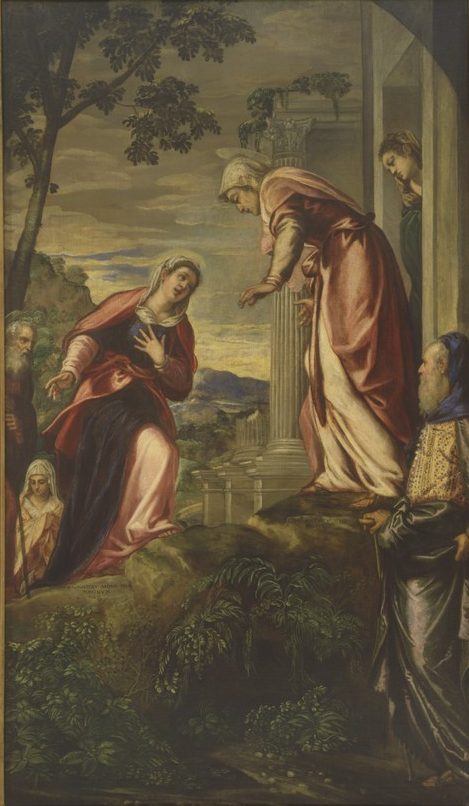
Tintoretto's The Visitation [20.3], painted for the Benedictine nuns of
the church of San Pietro Martire, features an elaborate and innovative
theatrical layout that must have been an important point of reference in
the training of the Carracci.