Francesco Francia, Lorenzo Costa and Amico Aspertini
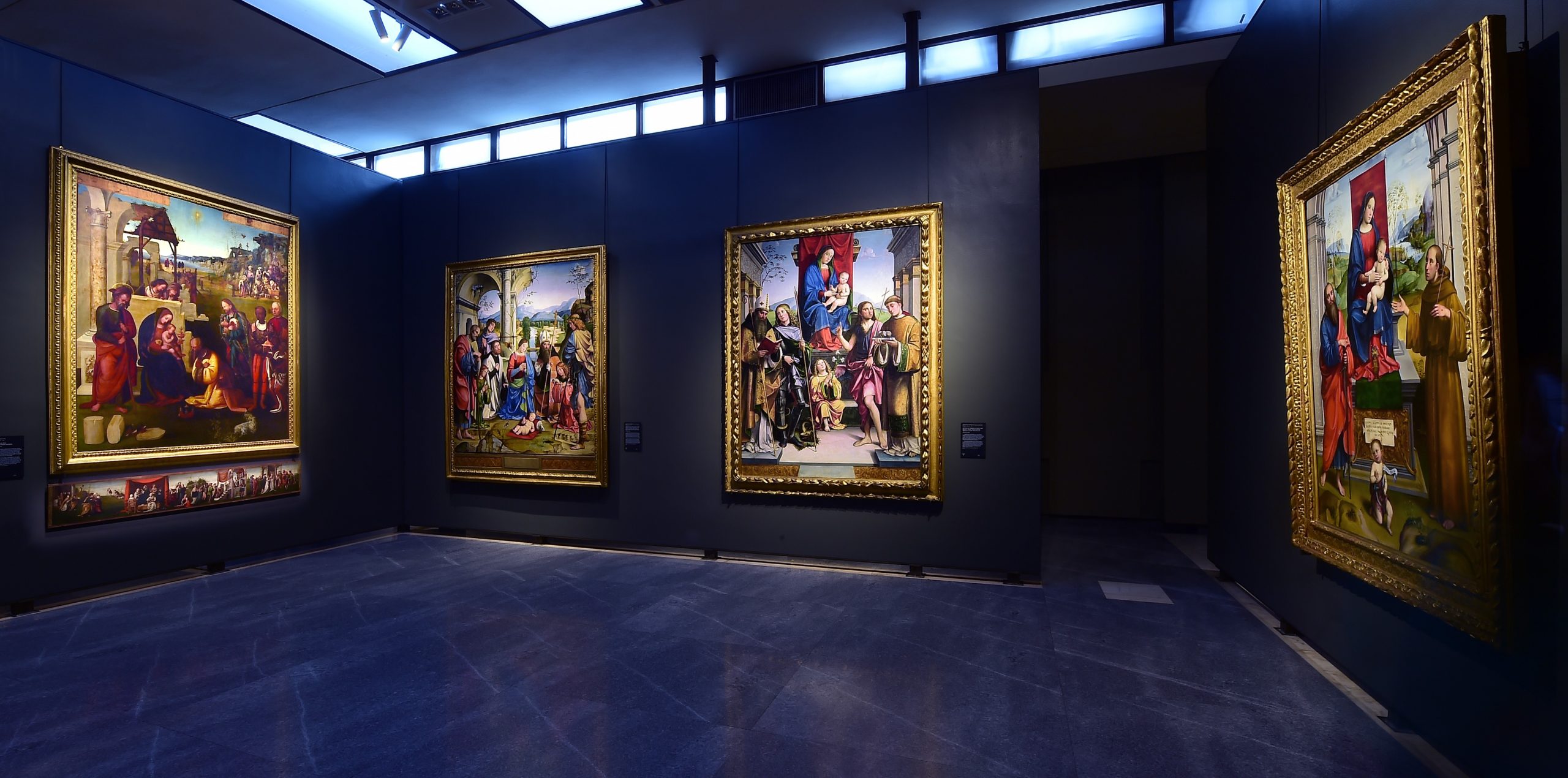
Ercole de’ Roberti’s permanent return to Ferrara (1486) coincided
with the beginning of a new season in Bolognese art, led by the local
luminaries Francesco Francia and Lorenzo Costa, the last great Ferrara artist to enter the service of the Bentivoglio court. The historiographer Giorgio Vasari wrote in his Vite that Francia, in parallel with Perugino,
ushered in a painting style based on “dolcezza ne’ colori unita – the sweet harmony of the colours”. This in turn inspired a “new and more vivid beauty” that was universally acclaimed by his contemporaries, only to be
surpassed by Raphael not long after.
From his earliest days as a painter, Francia showed an eclectic interest
in different models, but above all, he was openly sympathetic to the
Florentine circle of Verrocchio, Perugino’s master. In the splendid
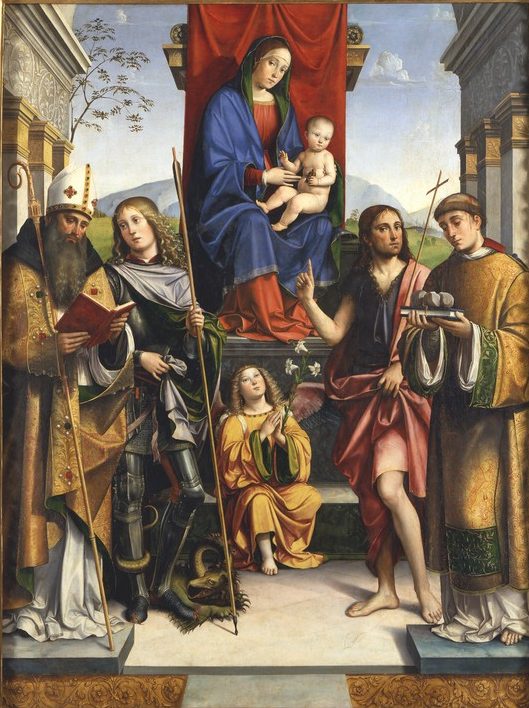
altarpieces he painted in Bologna for the churches of the Misericordia
[11.2-3; 12.1-2] and the Annunziata [11.1; 13.1-2] he succeeded in
combining the pursuit of classical rhythm and symmetry with
the optical subtleties of Flemish painting. He created a harmonious
language that focused on natural details, and was praised by the
humanist Filippo Beroaldo.
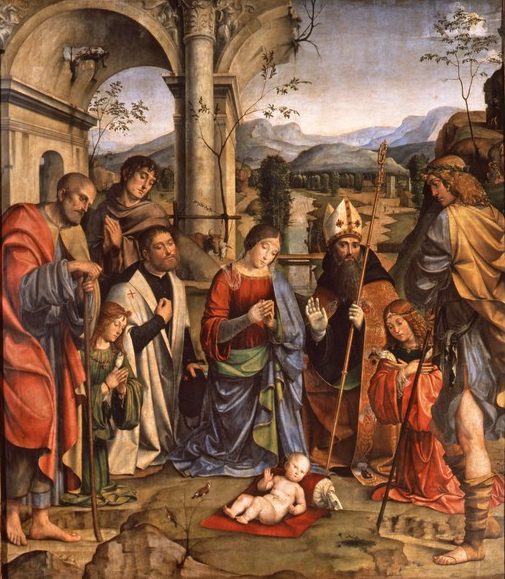
In contrast to this ideal of purity, also espoused at one point by Costa,
is the formal restlessness of Amico Aspertini’s work, a striking example
of which is the Adoration of the Magi [11.4].