The influence of Raphaelism
Vasari's Vite states that Francesco Francia is said to have died of
grief after Raphael’s Ecstasy of Saint Cecilia arrived in Bologna. However,
this is a pure invention, since the production in his workshop continued as
before, with no abrupt changes, and the same holds for the work of his
sons Giacomo and Giulio, who continued to work on updated versions of
their father's models [16.3].
One of those who embraced Raphael's new influence once it arrived in
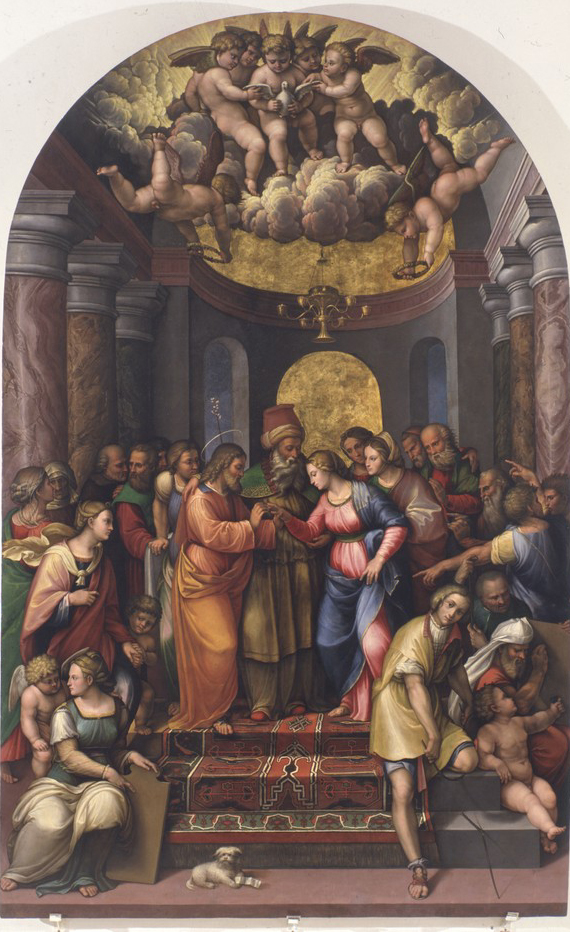
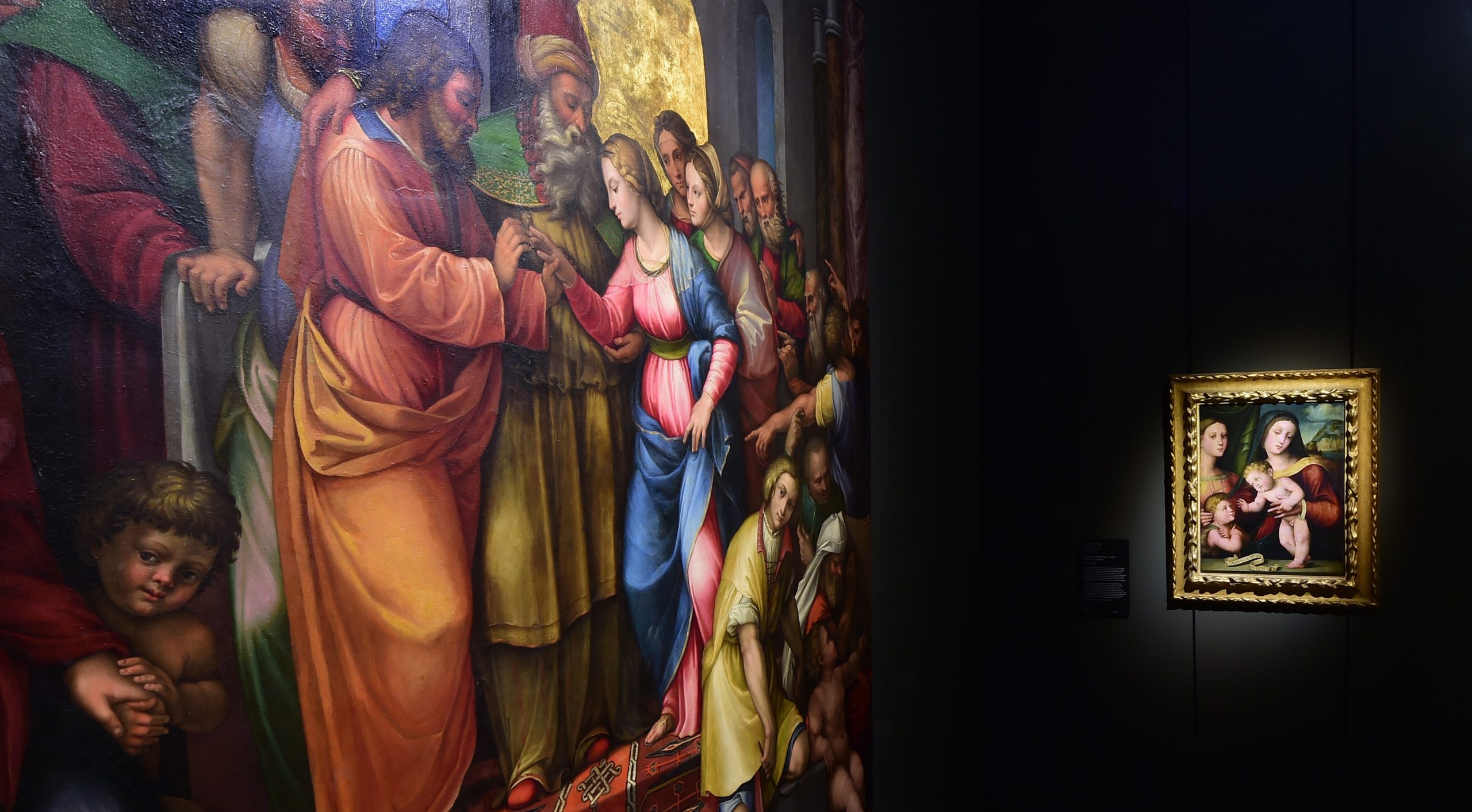
Bologna was the painter Girolamo da Cotignola, who for his Wedding of
the Virgin [16.1] drew inspiration from the grand scheme of the famous
School of Athens painted by Raphael (Vatican Museums).
Thanks to the work of artists who kept up to date with Roman innovations,
including Sebastiano Serlio, Biagio Pupini and Girolamo da Carpi, the
Olivetan artistic workshop of San Michele in Bosco became the true
epicentre of Bolognese Raphaelism; Raphaelesque elegance and Emilian
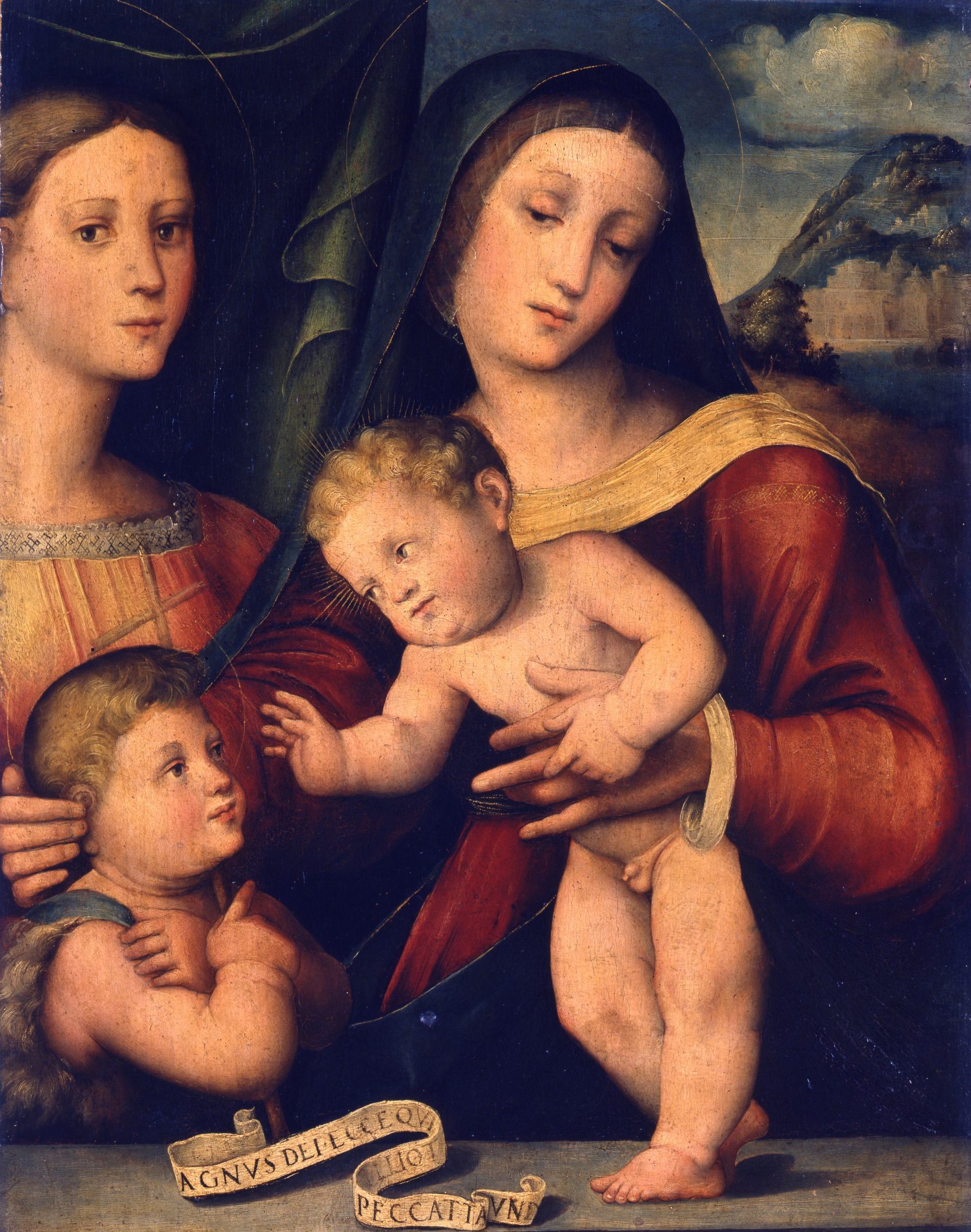
naturalism also characterised the work of Bagnacavallo [16.4], in the years
when Girolamo da Treviso also worked in the city.
The painters of nearby Ferrara were also influenced by the general
climate of renewal, in keeping with Giorgione’s innovations in the Veneto
area but with their gaze nevertheless turned towards Roma.